

Bumper Repair Services
Bumper Repair & Replacement in Central Ohio
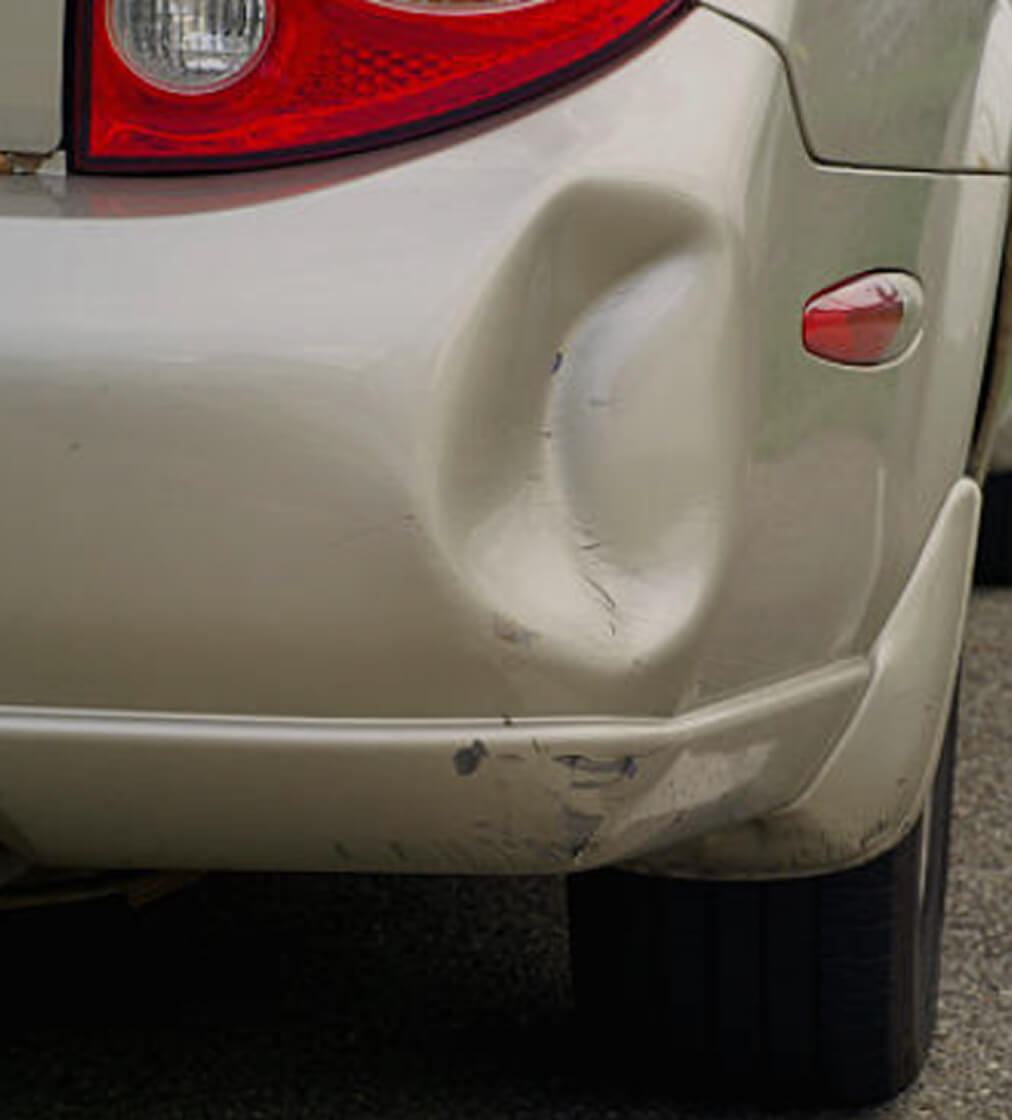
A hit like this one. The cover took the crease — the question is what the absorber and crush cans behind it did.
The part most people call the bumper is the cover — a painted plastic skin designed to be cosmetic and, in a real impact, sacrificial. The actual bumper is the reinforcement bar behind it, along with an energy absorber and a pair of crush cans engineered to collapse in a controlled way and take the hit before it reaches the frame rails. Those parts do their job once. A cover that pops back into shape tells you nothing about what happened to the structure underneath.
Modern bumper covers also carry hardware: radar for adaptive cruise and automatic emergency braking, ultrasonic parking sensors, sometimes a camera, fog lamps and washer jets. Removing and refitting that cover can be enough on its own to require recalibration. We inspect what is behind the cover, repair the cover where the manufacturer allows it and replace it where they do not, restore the structure to specification, and handle any required ADAS calibration in-house before the vehicle goes back to you — part of how we follow OEM repair standards.
Not Drivable? We’ll Come and Get It.
Free local towing is available to qualified customers based on location — just ask when you open your case. Rental vehicles are available as well, so you are not left arranging one on your own while we handle the repair.
Start Your RepairWhat You Can’t See Behind the Cover
A low-speed impact can leave the cover looking almost untouched while the parts behind it have already absorbed the energy they were built to absorb. This is what an inspection actually looks for:
- Crush cans partially collapsed — they are designed to deform once and are not meant to be straightened and reused
- A cracked or displaced energy absorber, which is what stands between a parking-lot hit and your frame rails
- Radar knocked off its aim behind the cover or in the grille, with no dash light to announce it
- Parking sensors unseated, cross-threaded into the wrong port, or reading a cover that now sits slightly differently
- Mounting tabs and brackets snapped, so the cover fits by tension rather than by design and starts to sag or gap
- Broken clips and fasteners reused instead of replaced, which is what causes rattles and misaligned panel gaps a month later
- Reinforcement bar movement that pushed damage back into the rails — structural damage that started as a bumper scuff
Why Drivers Choose Excite for Bumper Repair
- We take the cover off and look. Assessing a bumper from the outside is guessing. The inspection that matters happens with the cover removed.
- Repair when the manufacturer allows it, replace when they do not. Plastic covers can often be repaired properly and economically — but not every crack in every location, and the procedure says which.
- Calibration handled here. If pulling your cover means the radar or sensors need recalibrating, we do it in-house with OEM scan tools rather than sending you elsewhere.
- Refinished to blend, not just to match. Bumper covers take paint differently than steel panels. We blend into the adjacent panels so the repair does not announce itself in daylight.
- I-CAR, ASE, PPG and 3M certified technicians and estimators. The estimating side matters here, because sensor and calibration work that never reaches the estimate never gets performed.
- Documented, and detailed on delivery. You get a record of what was replaced and what was calibrated, and the vehicle comes back cleaned inside and out — the last step of every collision job we do.
Quick Bumper Repair Questions
The questions we hear most after a parking-lot hit or a low-speed collision. If yours isn’t here, call the shop at (614) 930-6103 — we’re glad to walk you through it.
My bumper looks fine. Do I still need it checked?
If you were hit, yes. Bumper covers are flexible by design and often spring back looking almost normal while the absorber and crush cans behind them have already deformed. Those parts are engineered to work once. An inspection with the cover off takes very little time and is the only way to know whether the structure behind it is still capable of protecting you next time.
Can a plastic bumper cover be repaired instead of replaced?
Often, yes. Scuffs, scrapes and many cracks in a plastic cover can be repaired properly and cost less than replacement. What matters is where the damage is and how the manufacturer treats that area — damage across a sensor mount, a reinforcement rib or a mounting tab usually means replacement, because a repair there will not hold or will not hold the hardware in the right place. We will tell you which one you are looking at and why.
What is actually behind my bumper cover?
On most vehicles: a foam or honeycomb energy absorber, a steel or aluminium reinforcement bar, and two crush cans that mount the bar to the frame rails. Depending on the vehicle you may also find radar for adaptive cruise and automatic emergency braking, ultrasonic parking sensors, a camera, fog lamps, washer jets and a good deal of wiring. The cover is the least important thing in that list.
Will bumper work affect my parking sensors or cruise control?
It can, and this is one of the most commonly skipped steps in collision repair because the damage looks cosmetic. Front radar and parking sensors are mounted to or behind the cover. Removing and refitting it can be enough to require recalibration on its own — and there is usually no warning light to tell you it was missed. We check what your specific vehicle requires and calibrate it here.
Why did my bumper repair cost more than I expected?
Usually because the estimate covers what is behind the cover, not just the cover. A replacement absorber, new crush cans, new clips and fasteners, refinishing and blending, and any required calibration all sit under the same job. An estimate that only prices the visible plastic is cheaper on paper and leaves the parts that protect you unaddressed. We write it up front so there are no surprises — and we make the case to your insurer.
Will a new bumper match the rest of my paint?
That is the goal, and it takes more than mixing to the paint code. Plastic and metal accept colour differently, and paint on a car that has been in the sun for a few years is no longer exactly the colour it left the factory. We match to the vehicle rather than the code and blend into the adjacent panels so the transition disappears. See collision paint repair for how that works.
How long does bumper repair take?
A cover repair and refinish is often a couple of days, most of which is paint and cure time. Replacement depends on parts availability. If calibration is required, or if the inspection turns up structural damage behind the cover, it runs longer — and we will tell you as soon as we know rather than at the end. Rental vehicles are available if you need one.
Is a cracked bumper cover worth fixing?
Beyond appearance, a cracked cover no longer holds its shape or its hardware properly, and cracks spread with vibration and temperature. If sensors are mounted in that area, their aim is affected. It also shows up on a vehicle history and at trade-in. Whether it is worth it depends on the vehicle and the damage — we will give you a straight assessment either way, at no cost.
Do I need an appointment?
An appointment gets you seen faster, and you can request one online or send photos of the damage from your phone to start. If the vehicle isn’t drivable, call us and we will arrange the tow.




Quick Links
Copyright © 2026 Alpha Automotive, LLC